
Campaign systems · Field issue 04
Find the force
behind the result.
Soreqimavu helps marketing teams distinguish real message lift from budget pressure, channel momentum and measurement noise.
Force profile
Start with the force you can actually observe.
Choose a reading mode. Each profile names the evidence to collect before a performance change is attributed to creative, media or market conditions.
LIFT · OBSERVABLE RESPONSE
Find the behaviour that rose with the message.
Compare one audience under the same offer, timing and channel conditions. Keep the competing explanation beside the result.

 Field condition 12
Outside the chamber
The audience meets a message in motion.
Performance data begins after exposure, but interpretation begins before it. Weather, prior knowledge, competing signs and the task at hand all change what the same line can do.
What became visible before the message?
Which alternative was physically nearby?
What urgency existed before contact?
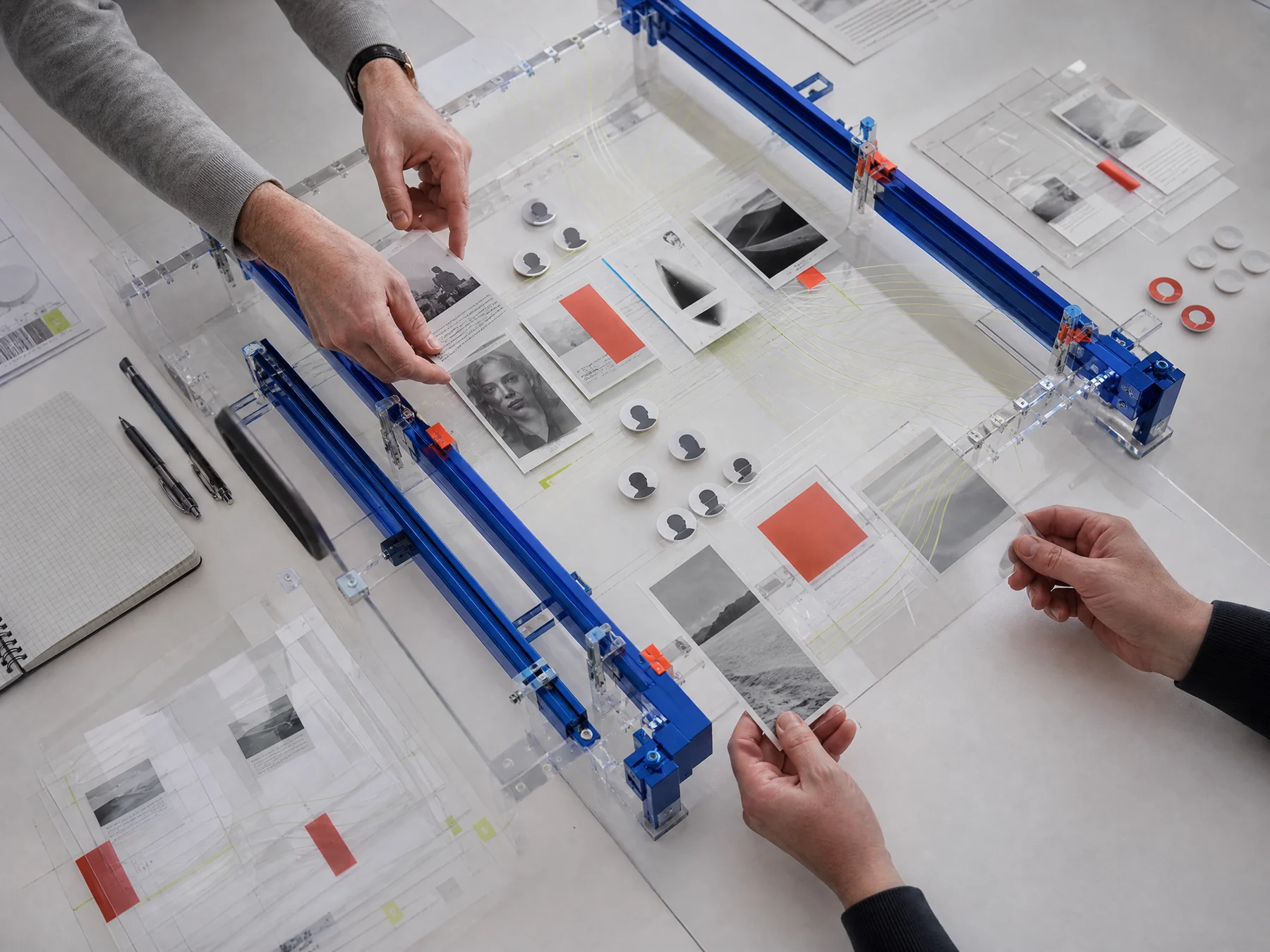
Live test chamber
Build a controlled campaign question.
Select one journey moment, pressure and signal. The chamber returns a test boundary, evidence request and decision rule for that combination.
ARRIVAL · UNCERTAINTY · ATTENTION
Reduce interpretation before increasing intensity.
Hold offer and placement steady. Compare whether a concrete first sentence changes qualified attention.
- Collect
- A clean baseline and one attention-quality indicator.
- Decision boundary
- Do not scale if attention rises without meaningful progression.
 Flow model · 05
Flow atlas
Read the path through three lenses.
LENS 01
Entry: name the expectation already in motion.
A visitor arrives with a task, a source promise and a level of category knowledge. Record all three before judging the landing message.
- Preserve the source message.
- Separate new and returning visitors.
- Mark the first credible action.
Drag sources
Three places where momentum can disappear.
Filter the evidence bay. A selected source expands to a full-width reading rather than collapsing into a small card.

Material drag
Too many layers hide the decisive signal.
Every additional module, qualifier and visual demand increases the effort required to identify the next meaningful action.

Interpretation drag
The conclusion outruns the evidence.
Place observed behaviour beside the explanation so an attractive story cannot replace a credible reading.
Handoff drag
The signal changes owners without its context.
Archive audience, timing, offer and boundary with the result. A metric without conditions becomes a reusable mistake.
Keep the condition beside the conclusion.
Calibration stages
Move from reading to decision.
Use the slider to see what a team must preserve before a signal supports broader action.
Baseline
Record the current flow without explanation.
Capture the same audience, offer, channel and timing before introducing a new condition.

Evidence notes
Read the limitation before the recommendation.
Search the notes or open each method. Every answer explains what the measure can support and where interpretation must stop.
No note matches that term. Clear the search and try a different condition.
Reading disciplineConditionSignalBoundary
Use a comparable baseline and inspect whether the change concentrates in the exposed audience. If every segment moves together, preserve seasonality as the stronger explanation.
Attention becomes useful when it is connected to a meaningful next action. A longer view or higher click rate alone cannot establish message quality.
A losing variant records which assumption failed under specific conditions. Keep its audience, placement and offer so the same weak idea is not repeated later.
Report the channel’s role in exposure, reinforcement and conversion separately. Avoid assigning the entire outcome to the last observable touch.
A boundary states what result is sufficient, which risks can block action and when the decision will be revisited. It is written before the result is known.
Keep the result inconclusive when exposure is uneven, tracking changes mid-test or the observed signal cannot distinguish the competing explanations.
 Test brief · Intake 08
Request a reading
Bring the question, not a polished conclusion.
Share the decision you face, the audience context and the evidence already available. This editorial form does not promise publication or advisory work.